Juvenile II: How Ballroom Dancewear Changes and How It Differs from Juvenile I
Moving from Juvenile I to Juvenile II is about more than entering a new age category in competitive ballroom dancing. Children become more confident on the floor, gain a better understanding of the Latin and Standard programs, participate in competitions more often, and gradually face new requirements for their dance wardrobe.
However, this does not mean that moving up automatically calls for a more adult-style dance costume with lots of decoration. FD Company recommends treating this stage as a gradual wardrobe update: ballroom dancewear should suit the child’s age, current competition rules, and individual characteristics.
How a Juvenile II Dance Wardrobe Differs from Juvenile I
The main difference is not one specific garment but the approach to choosing it. In Juvenile I, children are still getting used to the competitive format, so children’s dancewear is as simple and functional as possible. In Juvenile II, dancers spend more time on the floor and have a better understanding of which silhouette, color, and fit help them feel more confident.
At the same time, both age groups are part of the Juvenile category. Under the current WDSF rules, Juvenile I includes athletes who are no older than 9 during the calendar year, while Juvenile II includes those aged 10 and 11. Therefore, moving between these categories is not a sharp transition from a “children’s” costume to an “adult” one.
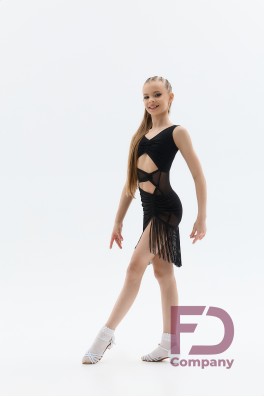
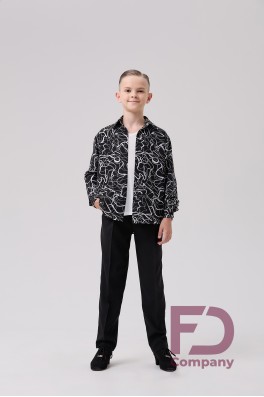
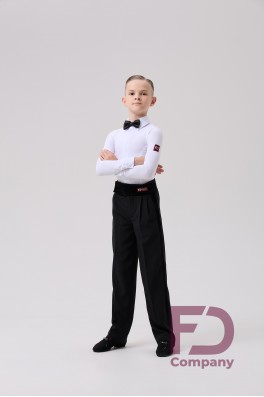
For a girl, this may mean moving to a more carefully selected dance dress or a leotard with a skirt, while for a boy it may mean choosing a better-fitting shirt and pants. In both cases, the clothing should allow freedom of movement and not distract from technique.
If the training wardrobe is already well established, there is no need to replace everything at once. Some basic items can continue to be used for lessons, while the competition outfit can be updated when necessary.
How to Make a Juvenile II Competition Look More Expressive While Following the Rules
It is important to dispel a common misconception here: moving into Juvenile II does not by itself remove the main restrictions on competition clothing. WDSF states that Juvenile costumes are designed to be as simple as possible and are subject to a number of specific restrictions, while more noticeable changes begin in Junior I.
That is why, in Juvenile II, it is better to create an expressive look not through elaborate decoration but through a thoughtful combination of permitted elements:
- a well-considered color that complements the child’s appearance;
- a neat fit and clear silhouette;
- fabric texture and quality of workmanship;
- permitted finishing details without visual overload.
For girls, it is especially important to remember the age-related restrictions on dress construction, transparent materials, and decorative elements. The current WDSF rules also include specific requirements for dancewear for boys: for example, shiny or patterned materials are not permitted for shirts and ballroom dance pants.
That is why a good Juvenile II costume is not the one with the most decorations. It looks expressive because of its balanced proportions and neat execution.
How to Choose a More Serious Competition Costume for Juvenile II
Once a child starts competing regularly, there comes a point when ordinary training clothes are no longer enough. A first more serious competition costume should be chosen not only for its appearance but also based on the dance program, the child’s body type, the level of competition, and the requirements of the specific organizer.
For a girl, it is important that a juvenile ballroom dance dress or Latin dancewear set does not hide the natural lines of movement or interfere with body movement. There is no need to deliberately choose a model several sizes too large in the hope that the child will grow into it: overly loose clothing fits poorly and can affect how movements look visually.
For a boy, fit deserves the same attention. Ballroom dance shirts should not pull across the shoulders or ride up during movement, while dance pants should not restrict legwork. A neat cut often looks much more professional on the floor than a large number of decorative details.
Before buying, it is a good idea to show the chosen option to the coach. A specialist knows the requirements of the specific tournament and can advise whether a new competition outfit is needed now or whether the existing clothing can still be used.
How to Use Costume Details and Decoration to Make the Look More Expressive
In Juvenile II, it is especially easy to cross the line between an expressive and an overloaded look. The child should remain the focus on the floor, while Latin dancewear and Standard dancewear should support movement rather than become a spectacle of their own.
Color, fabric texture, neat finishing, and small structural accents can produce a strong result when permitted by the rules. At the same time, any transparent elements, decorative details, and cut features should be checked against the current competition regulations.
For boys, expressiveness is usually achieved in a more restrained way: through a well-chosen color within the permitted clothing options, the fit of the shirt and pants, and an overall neat appearance. Fabric quality is particularly important here — both training pieces and competition outfits should remain neat even after active movement.
FD Company makes it possible to choose the foundation of a dance wardrobe and update it gradually. There is no need to replace everything every season: sometimes it is enough to change one competition item or choose a new model that better matches the child’s current height and skill level.
How to Prepare a Child for the Next Level of Competition Wardrobe
The most practical approach is not to wait until the old clothing suddenly becomes unsuitable. If the child is growing quickly and regularly takes part in tournaments, determine in advance which items will need to be replaced over the coming months.
- Check the current wardrobe. Assess the size, fabric condition, fit, and compliance with competition requirements.
- Set priorities. Replace the items the child uses most often first, or those that have already become too small.
- Agree on the competition look with the coach. This is especially important before the first serious tournament in a new age category.
- Do not buy dancewear “for several years.” At a young age, growth can quickly change the fit of a costume.
- Keep training and competition wardrobes separate. This helps preserve more expensive pieces and prevents you from overspending on clothing for every training session.
Juvenile II is a good time to teach a child to understand why a particular item is needed and how it affects confidence on the floor. At the same time, updating the wardrobe should not turn into an obligation to buy everything new at once. It is much more sensible to move gradually: keep comfortable basic models, replace items as soon as they become too small, and choose competition clothing according to the rules and the athlete’s actual needs.
At FD Company, you can choose dancewear for training and performances and gradually build a wardrobe that grows along with the child’s dancing skills. This approach helps maintain a balance between comfort, an expressive look, and reasonable spending — exactly what matters most at the Juvenile II stage.