Dress Code in Ballroom Dancing: What Juniors and Juveniles Can Wear
Competition clothing for ballroom dancing must comply with the tournament requirements, the dancer’s age category, and the chosen dance program — Latin American or European. At the same time, it is important that the outfit allows freedom of movement, emphasizes the body’s lines, and does not interfere with the performance.
For parents, choosing dancewear is especially important: an eye-catching model that looks great during training may not necessarily be suitable for a competition performance.
FD Company offers models for young male and female dancers, taking into account practical needs and the specific requirements of ballroom dancing. However, before purchasing a competition costume, it is worth understanding the basic rules first: they differ for girls and boys and gradually change as dancers grow older.
What Requirements Apply to Dancewear at Ballroom Dancing Competitions
In ballroom dancing, requirements for dance costumes are primarily intended to ensure a neat appearance and compliance with the chosen program. For girls, the silhouette, skirt or dress length, body coverage, and whether the style complies with the regulations are important. For boys, the requirements focus on the formal cut of the shirt and trousers, a neat fit, and the absence of excessive decoration.
At international WDSF competitions, there are separate provisions for different age categories, including specific dancewear requirements for both boys and girls. Therefore, there is no universal rule: before a tournament, it is necessary to check the current edition of the regulations and the requirements of the specific competition.
In practice, a basic dance wardrobe may include:
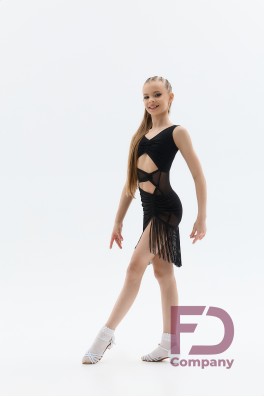
- dance leotards, blouses and tops, as well as other understated models for girls;
- long skirts and ballroom dance dresses in accordance with the program and age;
- dresses and skirts for Latin dance in accordance with the requirements of the specific age category;
- bright juvenile ballroom dance dresses for stage performances on the dance floor;
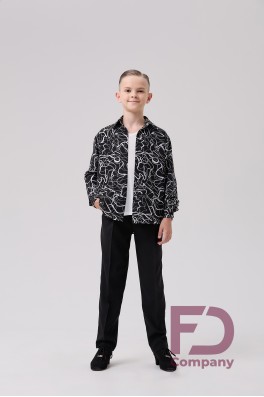
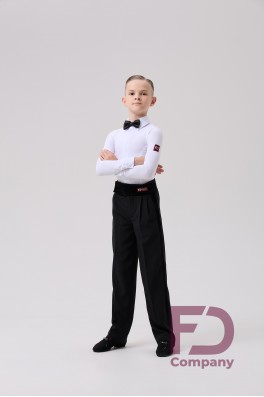
- shirts, dance bodysuits and ballroom dance pants for boys;
- basic training models and more formal competition outfits.
The main requirement for any item of dancewear is a secure fit. The model should not restrict movement, twist, slip, or distract the athlete while dancing.
Colors, Decoration and Rhinestones: What Is Allowed and What May Violate the Dress Code
Decorative details are most often the source of uncertainty before a competition. In children’s categories, additional restrictions may apply: excessive sparkle, elaborate decoration, transparent inserts, or elements that draw attention to particular areas of the body may be prohibited or limited by the regulations.
This is especially important when choosing competition clothing for a girl. Rhinestones, appliqués, shiny fabrics, and decorative finishes should only be used where and to the extent permitted by the tournament regulations. Even if a ballroom dancing dress looks neat and professional, it is better to check its compliance with the rules in advance.
For boys, the requirements are generally more conservative. Some regulations, including WDSF rules for children’s age categories, restrict the use of shiny and patterned fabrics. Therefore, the usual idea of making a costume brighter by choosing a more eye-catching fabric does not always work here.
If you want to make the look more expressive, it is safer to focus on a well-chosen color, the right silhouette, and quality tailoring rather than using as much decoration as possible.
How the Costume Requirements Differ for Juvenile I, Juvenile II, Junior I and Junior II
The age category directly affects the options available to an athlete when choosing a competition look. The WDSF system uses the Juvenile and Junior categories, which are further divided by age. Names and specific age ranges may differ under national regulations, so before a competition it is important to follow the rules of your particular tournament.
Moving from one category to another does not mean that any adult style can be worn the next day. Requirements gradually become more flexible, while specific restrictions depend on the current regulations.
For Juvenile I and Juvenile II, simplicity, coverage, and a neat appearance are particularly important. Girls wear more restrained options with skirts or dresses, while boys wear classic shirts and trousers without excessive shine. In Junior I and Junior II, there are gradually more opportunities to create an individual look, but competition rules must still be taken into account.
Therefore, when purchasing Latin dancewear and Standard dancewear, it is better to consider not only the child’s size but also their age category, the specifics of the dance program, and the tournament requirements. FD Company makes it possible to choose models that can form the basis of a dance wardrobe and be gradually expanded as the athlete grows.
Shoes, Hairstyle and Other Details of a Dance Look
A competition look consists of more than just a costume. Shoes should be appropriate for the dancer’s age, program, and competition requirements, as well as comfortable enough that the athlete does not have to think about them during the performance. Before the tournament, it is worth checking the condition of the heel, fastenings, closures, and sole.
The hairstyle and overall appearance are equally important. A girl’s hair should be securely tied back so that it does not come loose during movement. A boy’s hairstyle should also look neat and not get in his partner’s way. Makeup, accessories, and additional jewelry for young athletes may also be regulated by the rules of the specific tournament.
A simple principle works particularly well: nothing unnecessary. If children’s ballroom dancewear fits well, the dance shoes are the right size, the hairstyle is securely in place, and all decorative elements are permitted, it is much easier for the athlete to focus on dancing.
How to Check a Competition Look Before the Tournament and Avoid Costume Problems
It is better not to leave the final check of the competition look until the day of the competition. Put on the entire outfit in advance and ask the child to perform the main movements from the program. This makes it possible to spot fit issues, check the skirt length and the security of fastenings, and make sure that the decorative elements do not catch on the partner’s clothing.
- Check the rules. Clarify the requirements of your specific tournament and age category.
- Inspect the costume. Check the style, length, coverage, material, and decorative elements.
- Try on the complete look. The clothing, shoes, hairstyle, and accessories should work together as a whole.
- Dance in the costume. Perform several movements, turns, and bends to check the fit.
- Prepare a backup kit. Take the necessary fasteners, pins, hair ties, and other small items for quick adjustments to the look.
The right competition costume should not become a separate concern during the performance. Its purpose is to help the child feel confident, move freely, and focus on their partner and the music. If you choose ballroom dancewear with the dancer’s age, dance program, and tournament requirements in mind, finding the right model becomes much easier. The FD Company range allows you to explore training and competition options in advance and choose a wardrobe foundation that will provide comfort at every stage of the athlete’s sporting journey.