Junior I: What Changes in the Dance Wardrobe After Moving Up from Juveniles
Moving up from Juveniles to Junior I is a significant stage in competitive ballroom dancing. At ages 12–13, a child is no longer simply learning basic movements: technique develops, the level of competition becomes more demanding, and the dancer begins to better understand their stage image and the specifics of their dance program. At FD Company, you can find children’s ballroom dancewear for training and performances based on the dancer’s age, program, and individual needs.
The wardrobe gradually changes as well. For a girl, this may mean a new style of competition ballroom dance dress, a more refined silhouette, and more sophisticated details. For a boy, it may mean a more polished and well-fitted outfit, with a quality shirt, pants, and dance shoes. But it is better to begin updating the wardrobe by understanding which changes are actually needed after moving up to Junior I.
What Changes in Dancewear When Moving Up from Juveniles to Junior I
Junior I is the age category that, under WDSF rules, includes athletes who turn 12 or 13 during the calendar year. Therefore, moving up from Juveniles to Junior I is not simply about a new category name: the requirements for the competition image gradually change, and there are new opportunities to personalize it.
In Junior I, the focus gradually shifts from an extremely simple costume toward a more individual stage look. More attention is paid to silhouette, color, fit, and how well the outfit works with the dance program, while age-related and competition-specific restrictions still need to be taken into account.
At the same time, Junior I should not be viewed as an “adult category for children.” Competition ballroom dancewear must still be appropriate for the child’s age and comply with current regulations. Specific requirements may vary by competition, so before ordering or purchasing a complex dance costume, it is important to check the current rules.
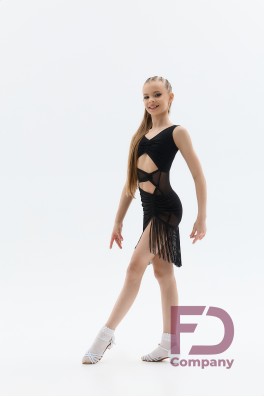
For a girl, a juvenile ballroom dance dress becomes the foundation of the competition wardrobe — more expressive in design while still appropriate for her age. If a very simple model was sufficient before, more attention can now be given to the silhouette, proportions, color, and the way the dress moves on the floor.
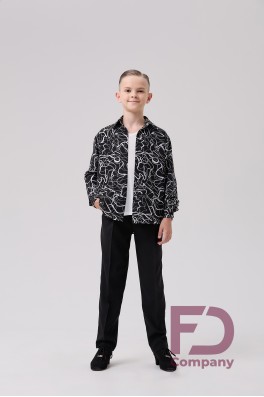
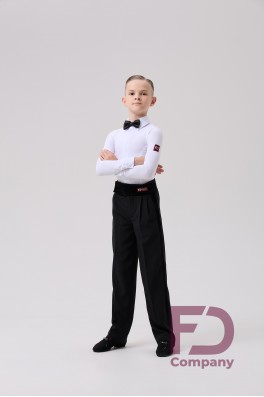
For a boy, the changes are primarily reflected in quality and fit. A ballroom dance shirt should fit well across the shoulders and stay in place during movement, while pants should maintain a clean line during movement and footwork. As a result, the couple’s overall look becomes more cohesive and professional.
How to Choose a Competition Dress and Dance Shoes for Junior I
When choosing a competition ballroom dance dress for Junior I, it is better to start not with color or decoration but with the requirements of the dance program. Models for Latin and Standard should match the character of the dance and allow freedom of movement on the floor. Fit, length, proportions, and the way the fabric behaves during turns, steps, and body movement are all important.
For the Standard program, a beautiful silhouette in motion is especially important: a Standard dance dress should create a visually continuous line and not interfere with the couple’s movements. For the Latin American program, greater attention is paid to the Latin dance dress, its dynamics, the movement of the skirt, and its ability to emphasize the character of the performance. Specific restrictions should always be checked against the tournament regulations.
Dance shoes should be chosen according to the same principle. They need to match the program, provide secure foot support, and remain comfortable during intensive movement. Buying shoes several sizes too large “to grow into” them is not recommended: a loose fit reduces foot control and can interfere with technique.
A boy’s part of the look deserves just as much attention. High-quality shirts and ballroom dance pants should maintain a neat appearance throughout the performance, while dance shoes should provide confident footwork and the right amount of glide across the floor.
What Opportunities for Color and Decoration Open Up in Junior I
This is where parents often expect the biggest changes: it may seem that after Juveniles, all you need to do is add rhinestones, shiny fabric, and elaborate decoration. In practice, that approach is not always the right one. The possibilities do become broader in Junior I, but the competition costume must still be appropriate for the dancer’s age and comply with current Dress Regulations.
WDSF publishes its competition rules and Dress Regulations separately, and the regulations can be updated. The official website currently provides the applicable documents for 2026, as well as changes already published for 2027. Therefore, it is best to check the latest version before a tournament.
You can make the look more expressive through:
- color — the right shade can complement the athlete’s appearance and make the couple stand out visually;
- silhouette — well-designed lines help the dancewear complement the dancer’s movements;
- texture and finishing — they add depth to the look without the need to overload it with decoration;
- permitted decorative elements — provided they are allowed under the rules of the specific competition.
For boys, the look generally remains more restrained: individuality is better expressed through fit, color, and quality of workmanship rather than through a large number of decorative elements.
How Hairstyle and Makeup Change for a Young Dancer After Moving Up to Junior I
In Junior I, the overall competition image can no longer be considered separately from the hairstyle and makeup. They should complement the costume and help the dancer look polished on the floor. At the same time, the goal is not to make the girl look visually older, but to create a neat stage look that suits her age and dance program.
The hairstyle should hold its shape securely throughout the performance. It is especially important to keep the hair away from the face and out of the partner’s way. The complexity of the hairstyle depends on hair length and the chosen look, but reliability is always more important than the number of decorative elements.
Makeup should also remain moderate and age-appropriate. The goal is to emphasize facial features so they can be clearly seen from the audience, without creating the effect of adult evening makeup. Accessories and jewelry should be selected to match the costume and the tournament requirements.
For boys, the task is simpler, but the principle is the same: a neat hairstyle and well-groomed appearance should complete the couple’s look rather than draw attention to themselves.
How to Create a Sophisticated Junior I Stage Look Without Overloading It
The main mistake at this stage is trying to show maturity through the number of details. A Junior I dancer should not look like a miniature version of an adult competitor. A cohesive look is much more convincing, with ballroom dancewear, shoes, hairstyle, and makeup working together and matching the character of the dance.
Before purchasing a new competition wardrobe, it is useful to evaluate the entire look:
- Costume. Does the silhouette suit the dance program and the dancer’s body type?
- Fit. Does the clothing allow free movement and maintain its shape during the dance?
- Color and details. Do the decoration and color overpower the dancer?
- Ballroom dance shoes. Do they suit the program and provide secure foot support?
- Final look. Do the dancewear, hairstyle, and makeup work well together?
The same principle applies to boys: well-fitting pants, a suitable shirt, the right shoes, and a neat hairstyle can make a much stronger impression than excessive decoration.
Moving up to Junior I is a good time to update the wardrobe thoughtfully. There is no need to buy all the dancewear and equipment at once: some training pieces can continue to be used, while the competition outfit can be updated as the dancer grows and requirements change. FD Company offers models for different needs, from regular training to performances, so the wardrobe can be gradually adapted to the athlete’s new level.