The Right Shoes Make All the Difference: How to Choose Ballroom Dance Shoes
In ballroom dancing, shoes play almost as important a role as the dancer's technique. They affect balance, footwork, the quality of turns and how the floor feels underfoot. That is why ordinary shoes cannot fully replace a specialist pair: ballroom dance shoes are designed for a very different range of movements.
FD Company helps dancers choose dance shoes for training and performances according to their gender, age, dance programme and experience level. The main rule is simple: shoes should stay securely on the feet, allow natural foot movement and remain comfortable even after a long training session.
How to Choose Dance Shoes Based on Gender, Age and Experience Level
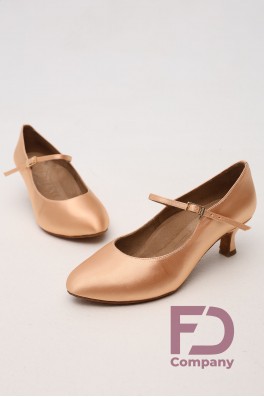
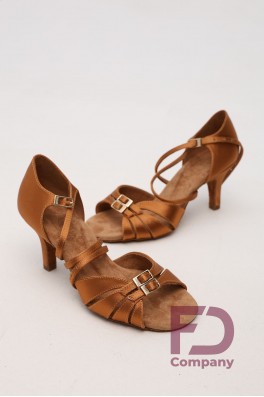
There is no universal pair suitable for every dancer. Ballroom dance shoes differ in design depending on who will wear them and how they will be used. Men's dance shoes usually have a closed toe and a low, stable heel. Women's shoes can be open or closed depending on the programme: closed-toe styles are generally chosen for Standard, while Latin dancers usually wear open-toe sandals with straps that secure the foot.
For the Latin programme, flexibility in the forefoot and freedom of movement are essential. In Standard, support, stability and comfort during gliding movements across the floor are more important. That is why shoes for these programmes can have noticeably different designs, and one pair may not be equally suitable for both disciplines.
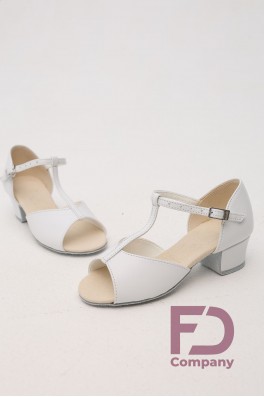
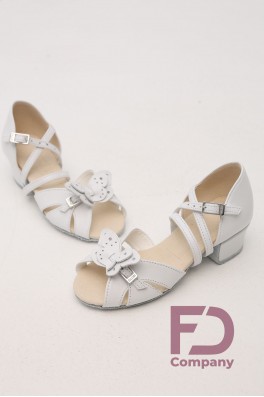
For children, stability and secure fastening are especially important. Beginners do not need high heels: children should be able to stand confidently and learn the technique without unnecessary strain. That is why children's ballroom dance shoes should be chosen according to age, dance category and the teacher's recommendations. Straps or laces must hold the foot securely without squeezing it.
For training, comfort and durability should come first. Shoes for competitions may differ in design, finish and construction, but they should also be tested during practice beforehand. Wearing a completely new pair at an important competition is risky: the feet need time to get used to the shoes, and dancers need to make sure their footwear does not interfere with their usual technique.
How to Choose the Right Heel Height, Width and Shoe Size
The right size is more than just a number on the box. The foot should be held securely inside the shoe, and the toes should not press against the front or feel cramped. However, too much extra room is not desirable either: if the foot slides inside the shoe, control over movement decreases and the risk of injury increases.
Do not automatically buy ballroom dance shoes in the same size as your everyday footwear. Sizing charts and shoe lasts vary between manufacturers and even between individual models from the same brand. It is therefore best to refer to the specific manufacturer's size chart, measure your feet and check the fit in person. If you are buying shoes online, measure both feet in advance and compare the results with the manufacturer's sizing guide.
During a fitting, it is useful to walk around, rise onto your toes, shift your weight and try a few turns. Check whether the heel stays in place, whether the foot slides forward and whether any areas of discomfort or pressure appear. In open-toe styles, the toes should sit naturally without extending too far beyond the edge of the sole. The strap should secure the foot without digging into it.
For children's dance shoes, checking the size regularly is especially important: a child may outgrow a pair long before the shoes show visible signs of wear. Avoid buying shoes several sizes too large in the hope that the child will grow into them. A loose fit makes it harder to control movements and can cause rubbing.
Heel height should be chosen according to the dancer's age, gender, programme and the teacher's recommendations. Beginners should not aim for the highest possible heel. A higher heel changes body alignment, shifts more weight onto the forefoot and requires good balance control. Women's Latin dance shoes usually have higher heels than styles designed for Standard. Men's ballroom dance shoes also vary in heel height depending on the programme.
The shape of the heel matters just as much as its height. A wider or flared heel provides a larger support area and generally offers greater stability. A narrow heel requires more precise balance control, so it should be chosen according to the dancer's experience and physical abilities.
Do not overlook shoe width. A narrow foot needs a style that does not feel loose around the instep, while a wider foot requires enough room in the forefoot. If the shoes have to be tightened excessively or still feel loose even when fastened, the problem may be the shoe shape rather than the size. In that case, it is better to try another model or a different width.
Leather, Suede and Other Materials Used in Ballroom Dance Shoes
The material affects not only the appearance of the shoes but also how they feel in motion. Leather is valued for its durability and ability to adapt to the shape of the foot over time. It is suitable for regular training when the shoe has been chosen correctly in terms of construction and size.
Dance shoes are also made from textile and synthetic materials. These can be lighter, more flexible and give manufacturers greater design possibilities. For example, satin styles are often chosen for performances because of their distinctive appearance. For training, it is particularly important that the material does not rub, holds the foot securely and retains its shape with regular use.
Suede deserves a special mention. It is commonly used for the sole because it helps combine the necessary grip with controlled sliding. This allows dancers to perform turns and move across the floor without feeling as though their shoes are literally sticking to it.
When choosing the upper, it is also important to consider the shoe's construction. The straps on open-toe styles of women's ballroom dance shoes deserve particular attention: they should hold the foot securely during movement without rubbing the skin. With closed men's shoes, check that the toe area is comfortable and the instep is properly secured.
Whatever material you choose, the lifespan of your shoes also depends on proper care. Even a high-quality pair will lose its shape more quickly if worn outside the dance studio, dried on a radiator or stored while damp.
How to Choose a Sole for Different Ballroom Dance Styles and Floor Conditions
The sole is one of the key features of professional dance shoes. Specialist models usually have soles made from materials that provide a controlled balance of grip and sliding. Suede soles are particularly common in ballroom dancing.
Their main advantage is that they allow dancers to move confidently across the floor, perform turns and control foot placement. The suede nap provides the necessary friction without restricting movement as much as many materials used in everyday footwear. This is why suede soles are well suited to training in a dance studio.
A regular shoe with an overly smooth sole may not provide enough grip on the dance floor, while the rubber soles of everyday shoes often create too much friction. This makes turning more difficult and forces dancers to use extra effort when moving their feet. As a result, certain movements can become harder to perform, and the strain on the joints may increase.
Sole flexibility also matters. In the Latin programme, mobility in the forefoot is particularly important, so shoes designed for this style are generally more flexible. Standard dance shoes may provide additional support for gliding steps and a stable foot position. However, the appropriate level of flexibility depends on the construction of the specific model and the dancer's technique.
The condition of the dance floor matters too. A dry, dusty or excessively slippery surface changes how the same pair of shoes feels. That is why dancers need not only to choose the right footwear but also to keep the soles in good working condition. If the suede nap becomes flattened or clogged with dust, the level of grip may change.
FD Company recommends choosing shoes according to the specific discipline and the coach's advice. Standard and Latin shoes may differ in construction, flexibility and the demands they place on footwork, so choosing your first pair based on appearance alone is not the best approach.
How to Care for Ballroom Dance Shoes and Extend Their Lifespan
Dance shoes require regular care, especially when suede soles are used several times a week. Over time, the nap becomes flattened, while dust and small particles accumulate on the sole. This changes the level of grip on the dance floor.
A special suede brush or sole brush is used to restore the surface. Clean the sole carefully without applying excessive pressure: the aim is to bring back its working texture, not damage the material. It is best to do this as needed, depending on the condition of the sole. Cleaning too frequently or too aggressively can accelerate wear.
- use dance shoes only in the studio or on a suitable dance floor;
- after each session, allow the shoes to dry completely and naturally;
- do not dry them on a radiator or leave them in a closed, damp bag for long periods;
- clean the suede soles periodically with a special suede brush or sole brush;
- store the pair in a dry, well-ventilated place, preferably separate from damp training clothes;
- check the condition of the heels, straps, fastenings and seams to spot damage in time.
If the sole has become very thin, the upper is damaged or the fastenings no longer hold the foot securely, care alone will not solve the problem. It is time to replace the shoes or have them repaired, if their construction allows it.
Well-chosen ballroom dance shoes should not constantly remind you that you are wearing them. They should simply let you transfer your weight confidently, use your feet effectively, perform turns and stay comfortable throughout the training session. When choosing new dance shoes at FD Company, consider not only the size and appearance but also the programme, experience level, individual foot shape and the conditions in which you will be dancing.