How to Choose a Gymnastics Leotard: Style, Size and Material
A good gymnastics leotard should do more than simply look good on a child. During training, it stretches with the body, stays in place during jumps and bends, does not restrict movement and does not distract the girl from her exercises. That is why, when buying one, it is important to consider not only the color and design but also the size, material, cut and fit.
If you are choosing your first gymnastics apparel, it is most convenient to start with a leotard: it is the foundation of a training outfit. When choosing gymnastics wear from FD Company, it is also best to focus first on the purpose of the garment and the child’s body type, and only then on decorative details.
What a Gymnastics Leotard Should Be Like for Training and Competitions
For daily training, a children’s gymnastics leotard should fit closely to the body without feeling too tight. Straps, armholes and the neckline should not dig into the skin, while the fabric should not bunch up around the stomach, back or underarms. At the same time, a model that is too loose is also uncomfortable: it can shift during exercises and make it harder for the coach to monitor the body position.
For a training model, the priorities are simple: comfort, freedom of movement, durability and easy care. A competition leotard should be selected with the regulations of the specific competition in mind. For example, the current FIG rules for rhythmic gymnastics require all parts of the leotard to be close-fitting; models with sleeves of any length, sleeveless designs or narrow straps are permitted.
Therefore, there is no need to buy an expensive performance costume simply because a child has started attending classes. For the first training sessions, comfortable gymnastics clothing is much more important, allowing the girl to calmly learn the basic elements.
How to Choose the Right Size for a Gymnastics Leotard
The most common mistake parents make is choosing a size based only on age or buying a garment “to grow into.” Children’s size charts vary, so it is more reliable to take measurements first and compare them with the specific manufacturer’s size chart. Height, chest, waist and hip measurements are usually taken; some manufacturers also use torso length.
When trying on a leotard, pay attention to its length. If it noticeably pulls upward, creates strong tension between the shoulders and crotch, or the child complains of discomfort, the model is most likely too small. If large folds appear on the back or stomach, the armholes pull away from the body and the fabric sags, the leotard is too large.
- At the shoulders: straps and sleeves should not dig in or constantly slip down.
- Across the torso: the fabric should fit smoothly without excessive folds or twisting.
- At the openings: they should stay in place during movement and should not cause chafing.
- In length: the leotard should not pull at the crotch or create excess sagging.
It is especially important to remember that stretchy fabric can compensate for a small difference in measurements, but this is not a reason to choose a smaller size. A leotard should stretch with the body rather than constantly being stretched to its limit.
How to Choose Leotard Material for Stretch, Density and Comfort
The material directly affects how comfortable it is for a child to train. Stretchy knitted fabrics that maintain a close-fitting shape and stretch in the necessary directions are suitable for gymnastics. Sewing recommendations for gymnastics leotards also commonly specify knitted fabrics with medium or high stretch combined with Lycra.
In practice, parents should consider several fabric properties at once:
- Stretch. The material should stretch during splits, bends and arm movements, then return to its original shape after stretching.
- Density. Fabric that is too thin may stretch out more quickly and become see-through when stretched. At the same time, excessively dense fabric should not restrict movement.
- Comfort. The fabric should not cause excessive friction against the skin or create a feeling of overheating during a long training session.
- Durability. For training wear, it is especially important that the material can withstand regular washing and repeated stretching.
There is no need to look exclusively for natural or exclusively synthetic materials. What matters more is the specific properties of the fabric and how it behaves on the child. For example, some models are made from cotton knitwear with a small amount of elastane, while others use more elastic sports fabrics.
When choosing training wear from the FD Company range, it makes sense to compare not only the fabric composition but also its density, stretch and the intended purpose of the particular model. For everyday training, practicality is usually more important than elaborate decoration.
How to Choose a Leotard Style: Neckline, Sleeves and Other Details
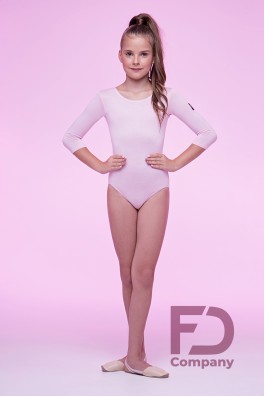
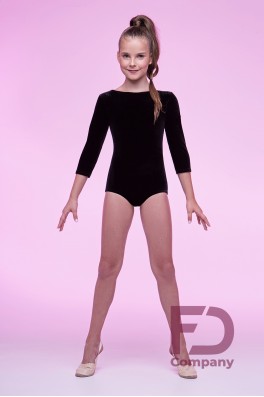
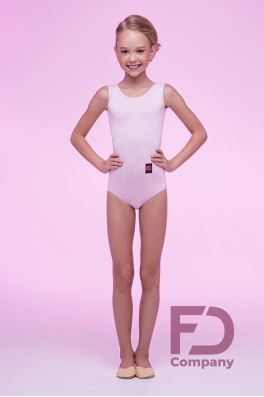
The style should be chosen based on more than appearance. The child should be able to raise her arms, bend and work on flexibility exercises comfortably. For younger gymnasts, simple models with a closed or moderately low neckline and short or long sleeves are often chosen. A sleeveless option can also be comfortable for active training if it stays securely in place on the shoulders.
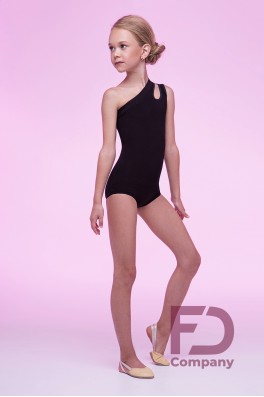
Short sleeves provide more coverage for the arms, but it is important to check that they do not restrict arm movement. Long sleeves should fit closely to the skin without bunching up. In competitive rhythmic gymnastics, FIG permits sleeves of any length as well as sleeveless models and designs with narrow straps.
It is also worth checking the neckline and armholes separately. A design that is too open may shift during exercises, while one that is too tight can cause chafing. For training, it is best to choose a style that the child barely notices after the first few minutes of a session.
How to Tell Whether a Leotard Fits the Child and Does Not Restrict Movement
Even a size that has been selected correctly according to the size chart should be tested in motion. A standard fitting in front of a mirror is not enough: some problems only become apparent when the child raises her arms, bends or does the splits.
Ask the girl to perform several movements that are typical of training: raise her arms overhead, bend deeply, squat, perform a leg swing and stretch. Pay attention to whether the leotard stays in place and whether any excessive tension appears.
- Raise the arms — the shoulders and armholes should not pull the fabric upward.
- Bend forward — the back and neckline should stay in place, and the fabric should not form large folds.
- Stretch — the material should not create sharp pressure or rub against the skin.
- Do several jumps — the leotard should not twist or shift.
- Check the skin after exercising — red marks and chafing around seams or elastic indicate a fit problem.
If the child can move freely after this check and stops paying attention to the clothing, that is a good sign. Ideally, the leotard should simply become a natural part of the training outfit rather than a separate problem the child has to think about during every training session.
A properly selected gymnastics leotard combines the right size, stretch, comfortable style and quality material. Do not focus only on appearance or leave extra room “to grow into”: freedom of movement and a secure fit are much more important for a child. If you are choosing between two models, it is better to compare them while moving and take the coach’s recommendations into account.
If you need children’s gymnastics wear for training, you can choose the right model according to the same principles: first determine its purpose and take measurements, then assess the fabric and fit, and only after that choose the style. You can follow this order when selecting training wear from FD Company — this way, the result will be both attractive and genuinely comfortable for the child.