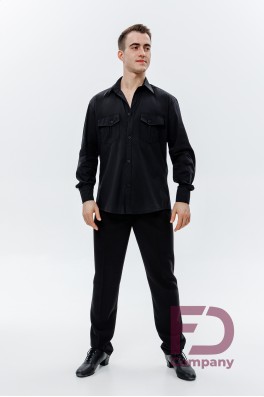
Ballroom Dance Pants and Shirts: A Guide to Choosing the Right Outfit for Male Dancers
A male dancer's outfit should do its job without drawing attention to itself: maintain its shape, create a clean silhouette and never distract from the performance. An everyday shirt or pair of pants may not be suitable for this purpose. During the dance frame, turns, wide steps and active body movements, clothing is subjected to very different demands.
That is why ballroom dancewear is designed with movement in mind. When choosing men's dancewear, FD Company recommends looking beyond how a garment appears when standing still and considering how it behaves in motion: does it stay in place, pull across the shoulders, restrict movement or shift during dancing?
How Should Ballroom Dance Pants Fit
Proper ballroom dance pants differ from everyday styles primarily in their fit and the way the fabric moves. For the Standard programme, a clean, elongated silhouette is particularly important: the pants should drape smoothly, avoid unnecessary creases and maintain a neat line during steps and turns. In the Latin programme, the cut can be more fitted, accentuating leg movements and hip action without restricting the dancer's range of motion.
A sufficiently high rise helps keep the waistband in place and visually lengthens the legs. However, the waistband should not press into the waist. A rise that is too low can disrupt the proportions of the outfit and create additional tension during body movements.
Length matters too. When dancing, the pants should fall neatly over the legs and work well with dance shoes. However, the hem should not drag on the floor, catch on the shoes or interfere with steps. It is important to check the length while wearing dance shoes, as the position of the pants can change noticeably once the shoes are on. Width is equally important: an overly narrow cut can restrict movement, while pants that are too loose can compromise the clarity of the silhouette.
A simpler style is perfectly acceptable for training, but the basic principles remain the same: the fabric should allow the dancer to step freely, turn and move the body, while the waistband should keep the pants securely in place. During a fitting, it is useful to take several wide steps, squat and turn the torso. This makes it easier to spot any pulling in the fabric or movement of the waistband.
How to Choose a Dance Shirt by Fit, Sleeve Length and Fabric
A dance shirt should follow the body's movements rather than work against them. Freedom across the shoulders and back is essential: when raising the arms, forming the dance frame or turning, the fabric should not become so tight that it restricts movement.
At the same time, a ballroom dance shirt must stay in place. A shirt that is too short will constantly come untucked, while an overly loose style can create folds and disrupt the line of the torso. That is why specialist men's dance shirts are often longer than regular shirts or made from stretch fabrics. Some models also feature added stretch across the arms and back to provide greater freedom of movement.
Sleeve length should suit the garment's size and cut: the sleeves should not pull when the arms are extended or bunch up into excessive folds. Breathable, stretchy fabrics are particularly practical for regular training, as they help wick away moisture and retain their shape when cared for according to the instructions. There may be a wider choice of fabrics for performances: a smooth finish creates a more formal look, while a subtle sheen helps the outfit stand out under stage lighting.
Before buying, it is worth testing the shirt in motion: raise your arms, form the dance frame, turn your torso and take a wide step. If the collar, shoulders and hem stay in place and the fabric does not pull anywhere, the fit is right.
Why Shirt Stays and Other Men's Dancewear Accessories Matter
Even a perfectly fitted dance shirt can shift slightly during energetic dancing. That is why special shirt stays are used as part of men's dancewear. They help keep the hem in place and maintain a neat, tucked-in appearance throughout the routine.
One option is a set of shirt stays that attach the bottom of the shirt to socks or other items of clothing. They prevent the fabric from shifting when the arms are raised or the torso is moving actively. Another solution is a dance bodysuit with a shirt-style top and a lower section that fastens between the legs. This one-piece design virtually eliminates the need to adjust the top during dancing. Similar styles are also available for young male dancers and can be worn for both training and competitions.
Other items are chosen according to the dance programme and type of performance:
- cufflinks and a bow tie — for a more formal, classic look;
- ballroom dance vests — an additional layer that helps create the silhouette required for a particular style;
- shirt stays — a practical solution when keeping the shirt neatly tucked in is important.
Not every dance accessory is necessary for every dancer. The choice depends on the programme, skill level and requirements of a particular competition. A functional outfit is sufficient for regular training, while a competition look may call for additional details.
When to Choose Dance Bodysuits, T-Shirts and Tunics
The classic shirt remains a basic choice, especially for the Standard programme and formal competition outfits. However, alternative tops can be more comfortable for training and certain performance formats.
A shirt-style bodysuit or ballroom dance bodysuit is particularly useful when it is important for the top to stay securely in place. Its stretchy construction follows the body's movements and eliminates the need to adjust the clothing. Modern styles can look like regular shirts while retaining the benefits of a one-piece design.
For training, a dance t-shirt or tank top is a suitable option when a formal look is not required. These styles pair easily with training pants and generally do not need additional accessories. A tunic or a looser top may be appropriate for certain choreography and training formats where fabric movement and a different visual effect are important. However, these options do not replace a classic shirt for a Standard competition outfit.
An alternative should be chosen to meet a specific need, not simply for variety. If a young dancer trains several times a week, it makes sense to have a few different tops and rotate them depending on the intensity and format of each session. For performances, it is best to agree on the choice with the coach in advance.
How to Put Together a Men's Dance Outfit Without Restricting Movement
It is best to build a male dancer's outfit from the basics up. First, choose dance pants and a top that provide comfort and a proper fit. Then check that they work well with the dance shoes and add the necessary accessories. This approach helps avoid spending extra on decorative details that may prove uncomfortable or incompatible with the main outfit.
- Identify the programme: Standard, Latin, training and performances require different levels of formality and may call for different clothing cuts.
- Check the fit: pants should not slip down or interfere with steps, while the shirt should not restrict movement across the shoulders or back or come untucked when the arms are raised.
- Choose the fabric: for regular training, stretch, breathability and resistance to frequent washing are particularly important.
- Add the finishing touches: shirt stays, a bow tie, a vest or other accessories should complement the outfit rather than interfere with dancing.
Competition rules must also be taken into account. The WDSF publishes separate Competition Rules and Dress Regulations, and these documents are updated regularly. Requirements may vary depending on the age category, discipline and status of the competition, so they should not automatically be applied to every event. Before purchasing a competition outfit, it is best to check the current regulations, the organisers' requirements and the coach's recommendations.
A good men's dance outfit does not require complicated choices. The essentials are a proper fit, suitable fabric, secure fastening and compliance with the requirements of the programme. At FD Company, you can find everything for dancing, including clothing for male dancers that supports movement, maintains a neat silhouette and lets them focus on what matters most — the dance.